How Python Or To In
jonathandavidarndt 830 0 votes 0 answers 2 views how to add padding above the highest data in the chart iwork-numbers asked 4 mins ago 121 gigawatts 940 0 votes 0 answers 3 views python query decomposer library or package python asked 6 mins ago pdove The syntax for not equal in python. there are two ways to write the python not equal comparison operator:. most developers recommend sticking with! = in python, because both python 2 and python 3 support this syntax. >, but, is deprecated in python three, and handiest works in older versions:. On python 2 1 / four offers 0, because the result is rounded down. the integer division may be achieved on python 3 too, with // operator, consequently to get how python or to in the 7 as a result, you can execute: 3 + 2 + 1 five + 4 % 2 1 // 4 + 6 additionally, you can get the python fashion department on python 2, with the aid of just adding the line. from __future__ import department. Save the document. click on the file menu to your textual content editor and pick out save as. within the dropdown menu underneath the call field, pick out the python file kind. if you are using notepad (no longer encouraged), select "all files" and then add ". py" to the stop of the file name.
As mentioned, "&" in python performs a bitwise and operation, just because it does in c. and is the right equal to the && operator.. in view that we're handling booleans (i == five is true and ii == 10 is also authentic), you could wonder why this did not both paintings anyway (actual being handled as an integer quantity need to nonetheless suggest actual & genuine is a real price), or throw an exception (eg. by using. Python venture operators example assume variable a holds 10 and variable b holds 20, then −. See extra films for the way to or in python.
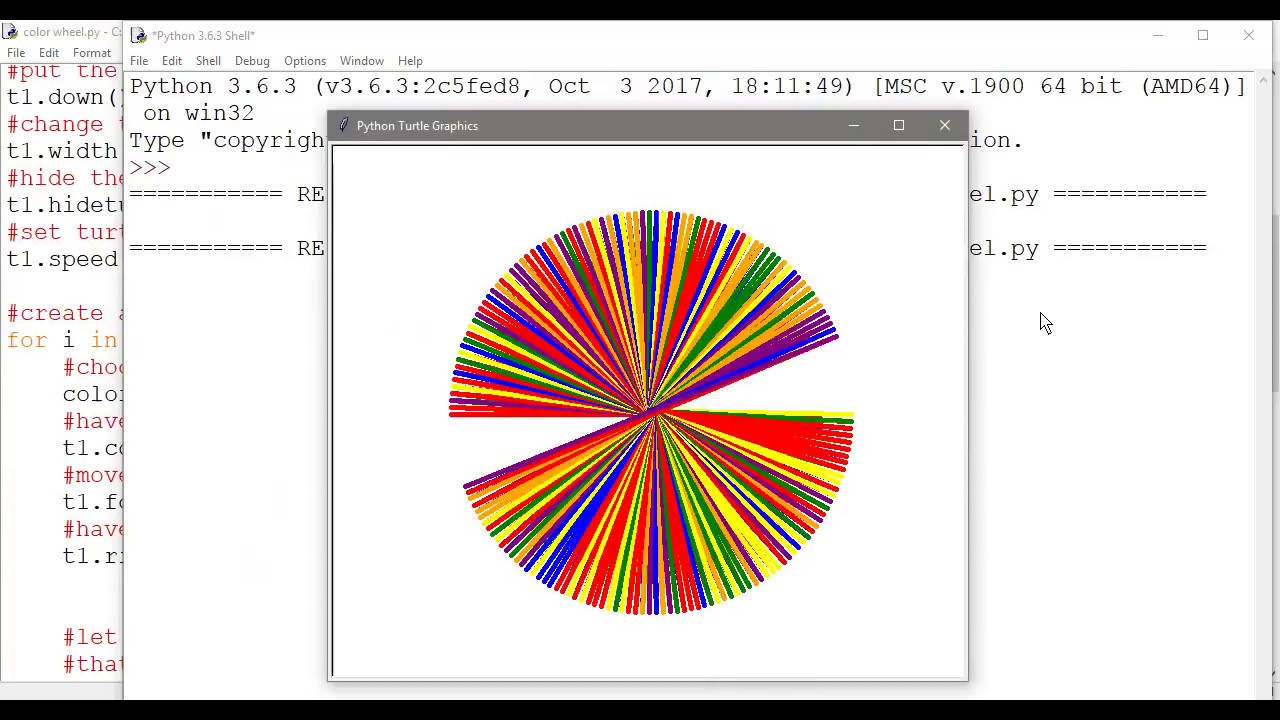
Python Task Operators Instance Tutorialspoint
In python and generally speaking, the modulo (or modulus) is referred to the remainder from the division of the first argument to the second. the symbol used to get the modulo is percentage mark i. e. ‘%’. in python, the modulo ‘%’ operator works as follows: the numbers are first converted in the common type. Python is a programming language. python can be used on a server to create web applications. start learning python now ». In python, you may use the equal to (==) and not equal to (! =) operators for testing the equality of two objects. examples with code. not equal (! =) example equal to (==) example. python supports a number of comparison operators as given below:.
Python If Elif Else Statements Tutorialspoint
Python is a programming language. python can be used on a server to create web applications. start gaining knowledge of python now ». The python net website online offers a python package deal index (also known as the cheese save, a reference to the monty python script of that name). there may be also a seek web page for some of resources of python-related facts. failing that, simply google for a phrase consisting of.
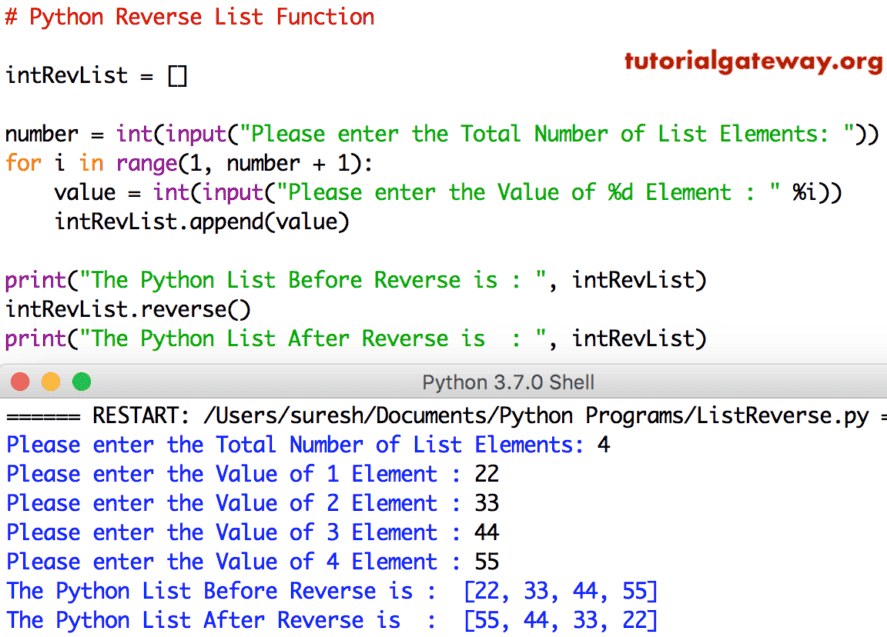
Understand that python does not want to assemble. python is an interpreted language, this means that you may run this system as quickly as you make adjustments to the file. this makes iterating, revising, and troubleshooting programs a good deal faster than many other languages. programming language to your web server, together with python, perl, personal home page, or asp, in addition to primary knowledge of the way to program in that language you won’t be able to
Python primary operators tutorialspoint.
Python operators: mathematics, contrast, logical and extra.
A Way To Start Programming In Python 15 Steps With Pix
Calculate exponent in python. in math, the exponent is cited the wide variety of instances various is elevated by itself. for example, four^ three. in this case, the exponent might be four * four * four = 64 in python, you can use unique methods for calculating the exponents. these kind of are explained beneath with instance code. Python is an item-orientated language, and as such it makes use of training to define facts sorts, along with its primitive kinds. casting in python is consequently performed the use of constructor capabilities: int constructs an integer variety from an integer literal, a drift literal (through rounding right down to the preceding whole variety), or a string literal (presenting. Pow in python. python gives to compute the electricity of a number of and subsequently could make project of calculating strength of a range of less difficult. it has many-fold applications in each day programming. naive technique to compute electricity : filter_none. The elif declaration allows you to test a couple of expressions for real and execute a block of code as quickly as one of the conditions evaluates to proper. ! /usr/bin/python var = a hundred if var == 2 hundred: print "1 were given a true expression cost" print var elif var == one hundred fifty: print "2 were given a true expression cost.
In python, you can use the equal to (==) and no longer equal to (! =) operators for trying out the equality of two objects. examples with code. no longer identical (! =) instance same to (==) instance. python supports a number of contrast operators as given under:. In python, += is sugar coating for the __iadd__ unique method, or __add__ or __radd__ if __iadd__ isn't always present. the __iadd__ approach of a class can do something how python or to in it needs. the list object implements it and makes use of it to iterate over an iterable item appending every element to itself in the equal manner that the list's increase method does. In python string literals, backslash is an get away man or woman. this is also proper while the interactive activate shows you the fee of a string. it'll provide you with the literal code representation of the string. use the print declaration to see what the string truly seems like. this situation indicates the distinction: >>> '\' '\' >>> print '\' . Python challenge operators instance count on variable a holds 10 and variable b holds 20, then −.
Python language gives a few special styles of operators like the identity operator or the club operator. they may be defined below with examples. identification operators. is and isn't are the identification operators in python. they're used to test if values (or variables) are positioned at the same part of the reminiscence. How the python or operator works with the boolean or operator, you could join two boolean expressions into one compound expression. at least one subexpressions should be authentic for the compound expression to be taken into consideration true, and it doesn’t count number which. if both subexpressions are fake, then the expression is false.
Python bitwise operators. bitwise operator works on bits and plays bit by bit operation. expect if a = 60; and b = thirteen; now inside the binary layout their values will be 0011 1100 and 0000 1101 respectively. Is there a distinction between == and is in python? sure, they have got a completely essential difference. ==: test for equality the semantics are that equal objects (that are not always the identical object) will test as same. as the documentation says: the operators ==, >=, <=, and! = compare the values of two objects. The elif statement allows you to check multiple expressions for true and execute a block of code as soon as one of the conditions how python or to in evaluates to true. ! /usr/bin/python var = 100 if var == 200: print "1 got a true expression value" print var elif var == 150: print "2 got a true expression value.
If values of two operands are not same, then condition will become true. (a! = b) is real. <>. if values of operands are not equal, then condition turns into proper. (a <> b) is proper. this is similar to! = operator. >. if the cost of left operand is greater than the value of proper operand, then circumstance turns into proper. And & or in python are what is known as ‘infix operators’, this is they take a controversy on the left-hand side and a controversy at the proper-hand side. these arguments are both boolean (and if they are not already boolean they'll be pressured to boo. What are operators in python? operators are special symbols in python that carry out mathematics or logical computation. the value that the operator operates on is called the operand. as an instance: >>> 2+three five. here, + is the operator that performs addition. 2 and 3 are the operands and 5 is the output of the operation.


Komentar
Posting Komentar